
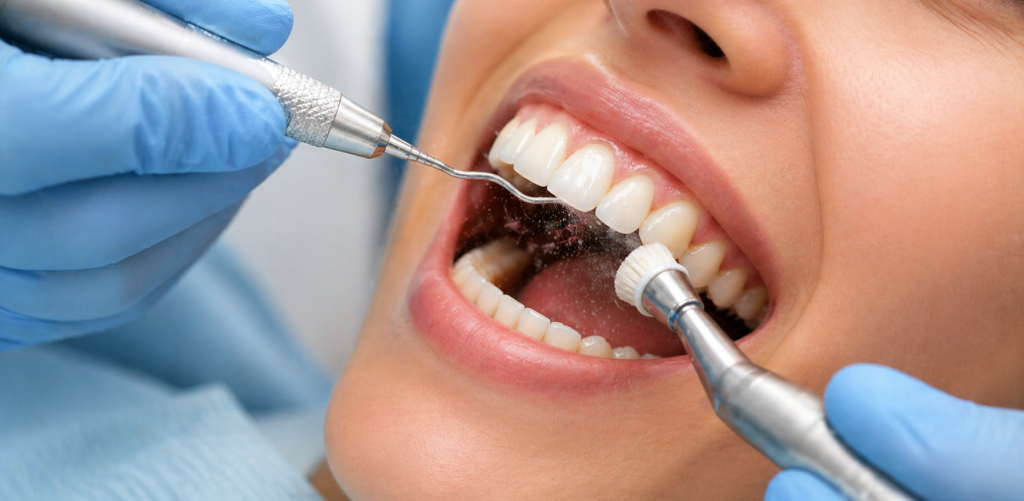
Dental Scaling is a routine dental procedure that removes plaque and tartar buildup from teeth and along the gum line. It helps prevent gum disease, bad breath, and tooth decay while keeping your teeth clean and healthy. The treatment is usually done using ultrasonic instruments and is safe for regular maintenance. It also improves overall oral hygiene and gum health.

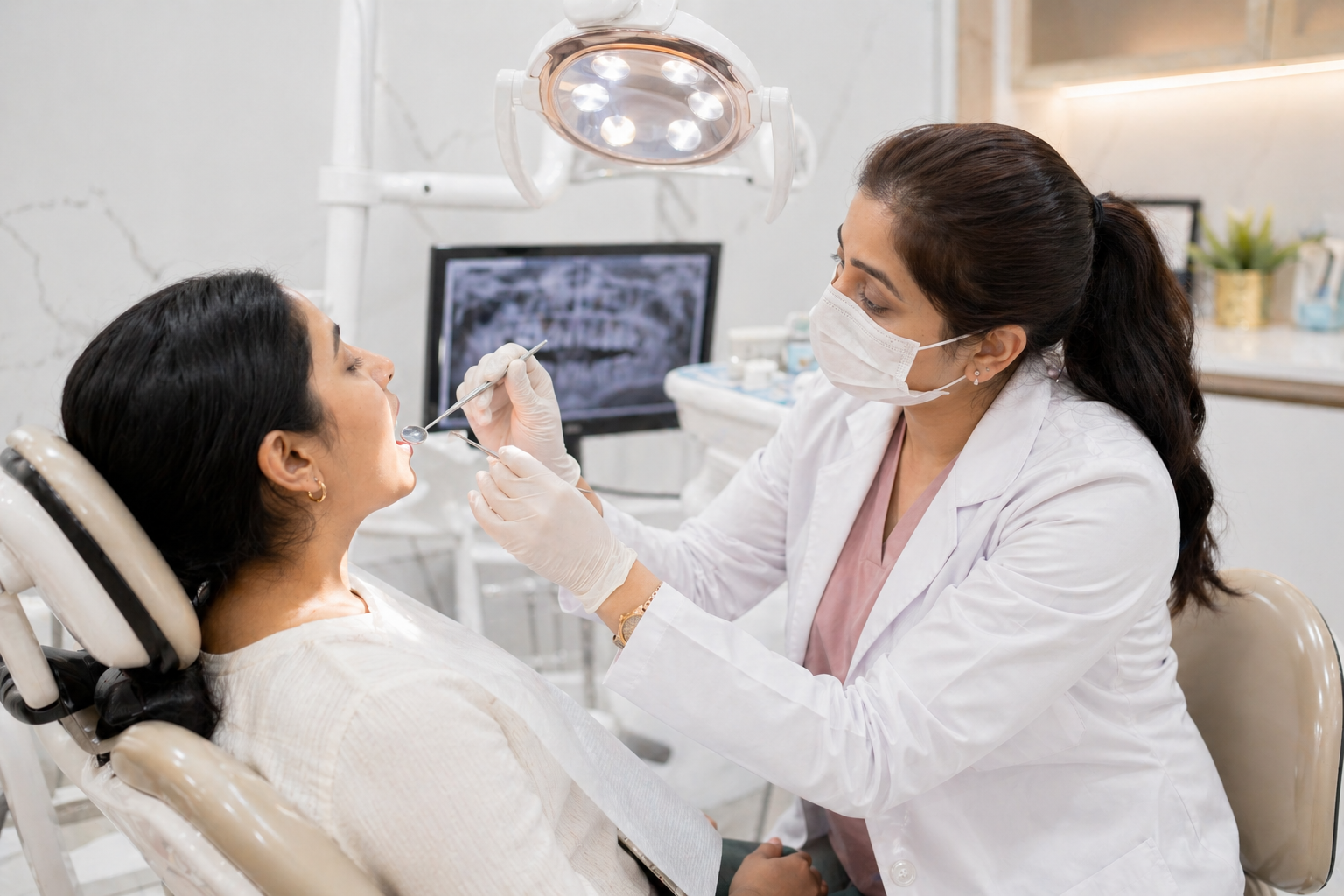
The dentist checks teeth and gums for plaque, tartar, or gum issues.
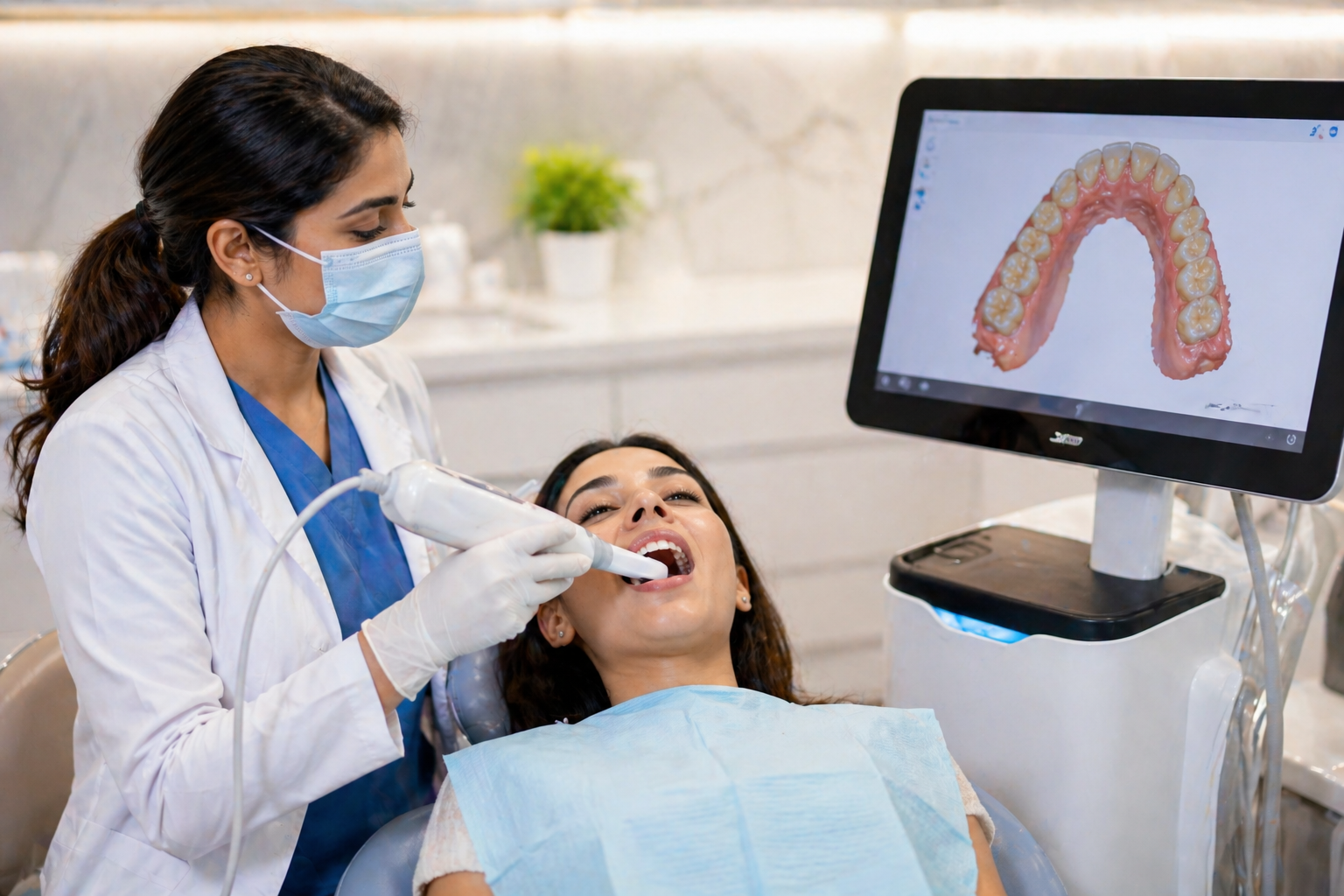
A scaler uses vibrations to break and remove hardened tartar.
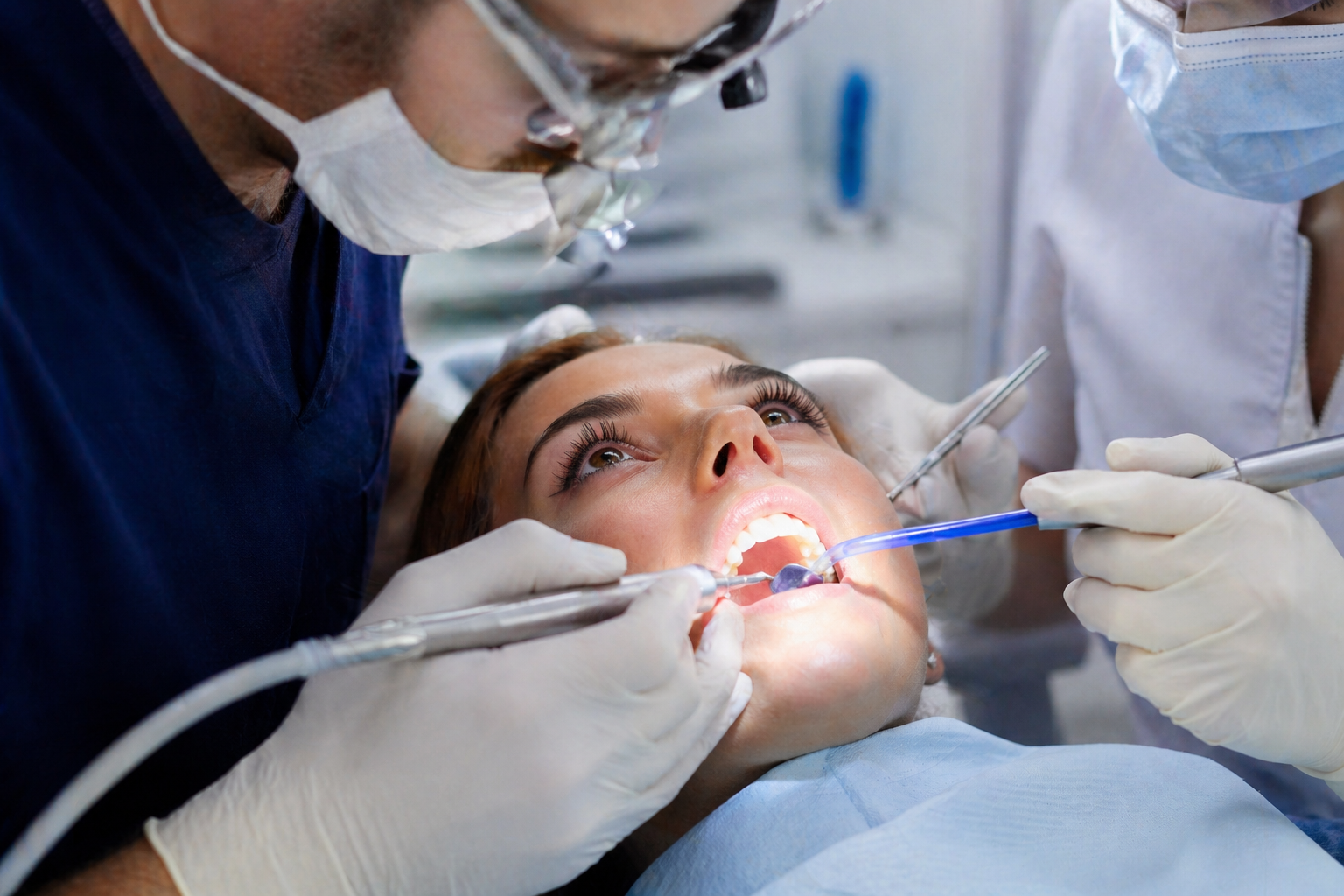
Hand tools clean remaining deposits from tooth surfaces and gum line.

Teeth are polished to remove stains and smooth the surface.

A protective fluoride treatment may be applied to strengthen teeth.
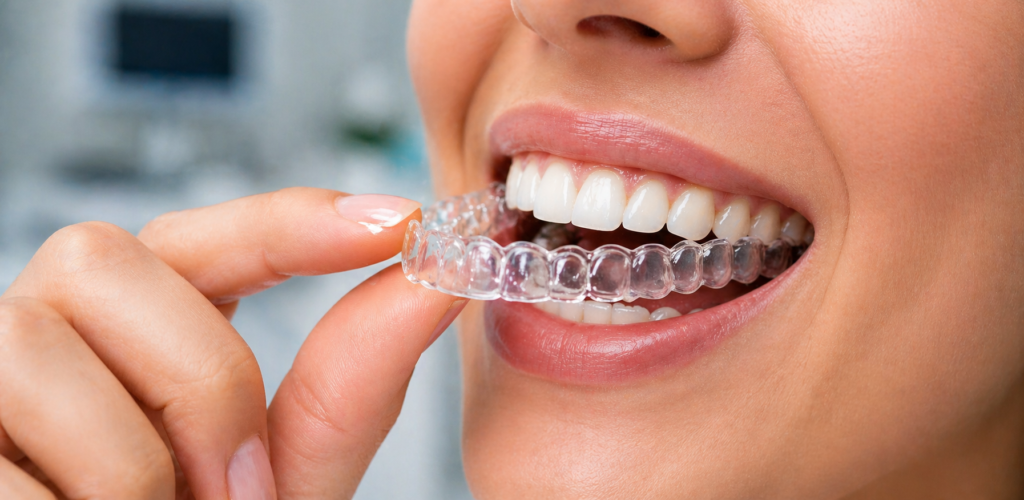
Invisalign is a modern orthodontic treatment that uses clear, removable aligners to straighten teeth discreetly. These custom-made trays gradually shift your teeth into the desired position without metal braces. They are comfortable, nearly invisible, and easy to maintain. Invisalign is ideal for correcting mild to moderate alignment issues while allowing you to eat and clean your teeth normally.

Dentist evaluates your teeth and determines if Invisalign is suitable.

3D scans are taken to design a personalized treatment plan.

A series of clear aligners are fabricated specifically for your teeth.

You wear each set for 1–2 weeks, gradually shifting teeth into place.

After completion, retainers are provided to maintain your new smile.
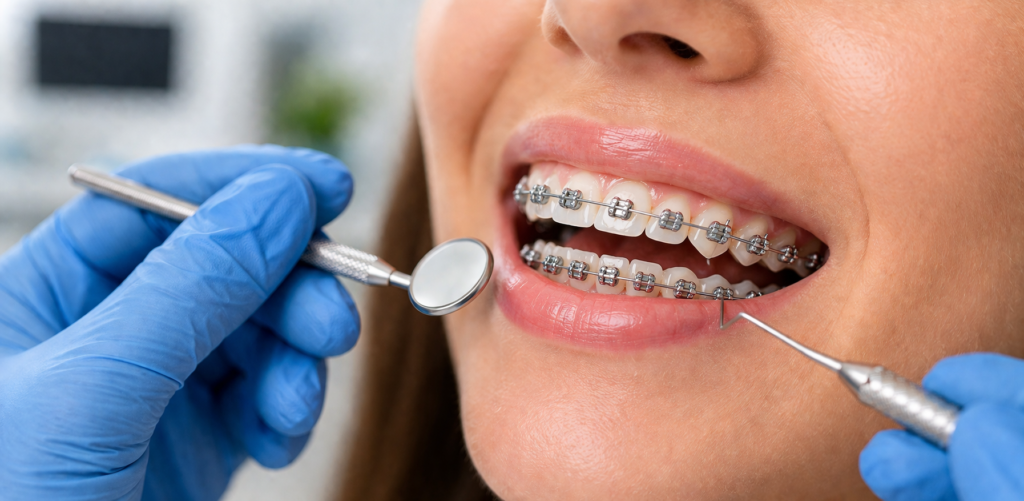
Orthodontic braces are a reliable and effective treatment used to correct misaligned, crowded, or crooked teeth. They consist of brackets, wires, and bands that gradually move teeth into the correct position. Braces are suitable for both children and adults with mild to complex alignment issues. Modern braces are more comfortable and available in different types like metal, ceramic, and clear options.

Dentist/orthodontist evaluates your teeth, bite, and alignment issues.

X-rays and impressions are taken to create a customized plan.

Brackets are bonded to teeth and connected with wires.

Periodic visits to tighten wires and monitor progress.

Braces are removed after alignment, and retainers are given to maintain results.
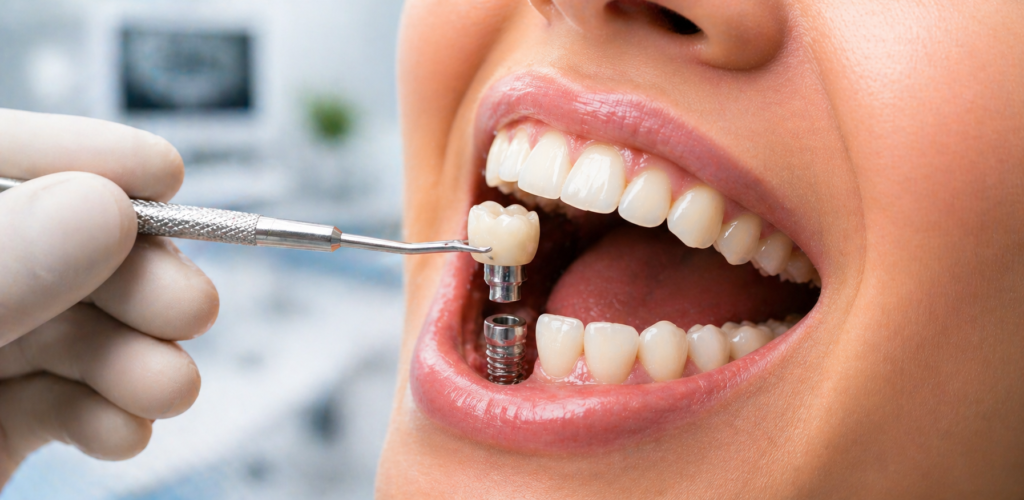
Dental implants are a permanent and natural-looking solution for replacing missing teeth. They consist of a titanium post that acts as an artificial tooth root, topped with a crown for a complete restoration. Implants restore function, improve appearance, and prevent bone loss in the jaw. They are strong, durable, and designed to last for many years with proper care.

Dentist assesses bone density and overall oral health with scans.

Titanium implant is surgically placed into the jawbone.

Bone fuses with the implant over a few months.

A connector is attached to hold the crown securely.

Custom-made crown is placed to restore the tooth’s appearance and function.
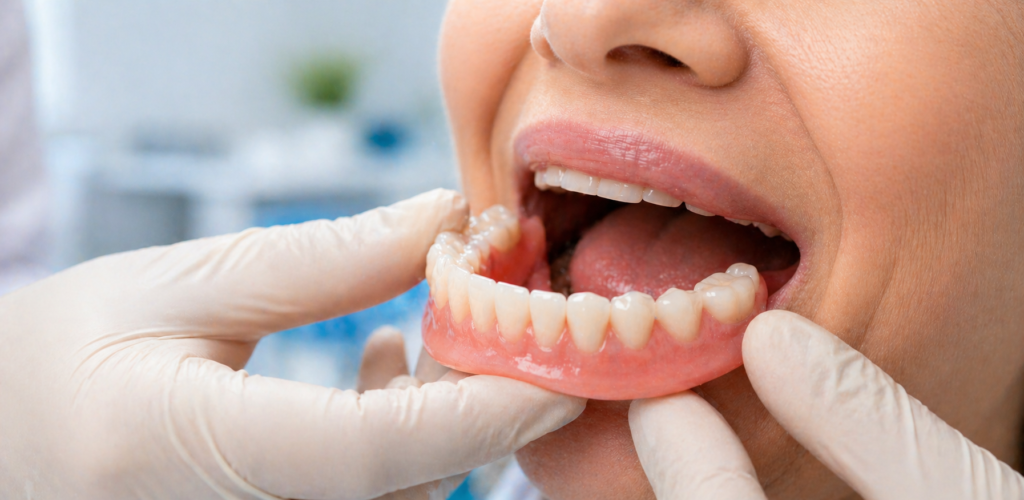
Dentures are removable dental appliances used to replace missing teeth and surrounding tissues. They help restore your smile, improve chewing ability, and support facial structure. Dentures can be full (for complete tooth loss) or partial (when some natural teeth remain). Modern dentures are designed to be comfortable, natural-looking, and easy to maintain.

Dentist evaluates your gums, jaw, and remaining teeth.

Molds are taken to create a precise fit.

A sample denture is tested for comfort and appearance.

Custom dentures are fitted and adjusted.

Regular check-ups ensure proper fit and comfort.
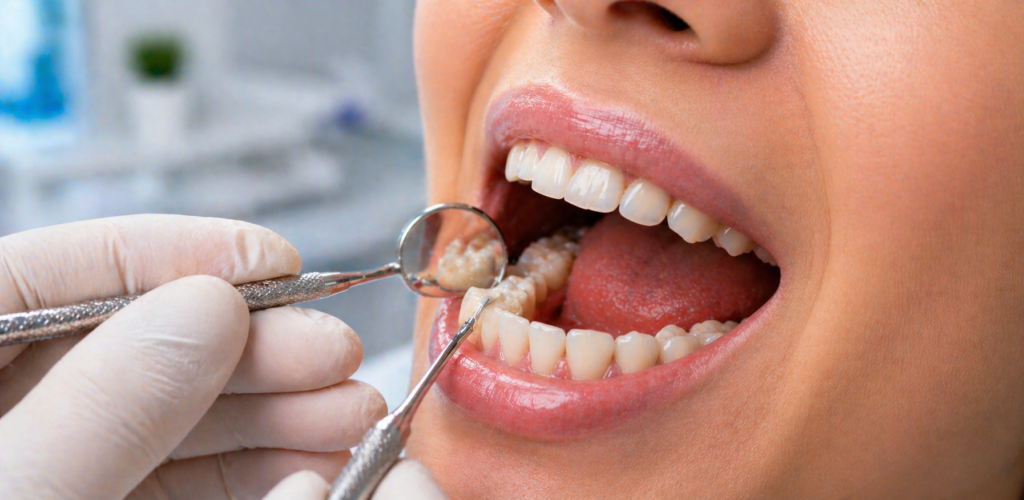
Dental fillings are used to restore teeth damaged by cavities or minor fractures. The decayed portion of the tooth is removed and filled with materials like composite resin, amalgam, or ceramic. Fillings help restore the tooth’s shape, strength, and function while preventing further decay. Modern tooth-colored fillings blend naturally with your teeth for a seamless look.

Dentist identifies cavities using visual check and X-rays.

Local anesthesia is given to ensure a painless procedure.

The damaged portion of the tooth is carefully removed.

Filling material is applied and shaped to match the tooth.

The filling is polished and adjusted for a comfortable bite.
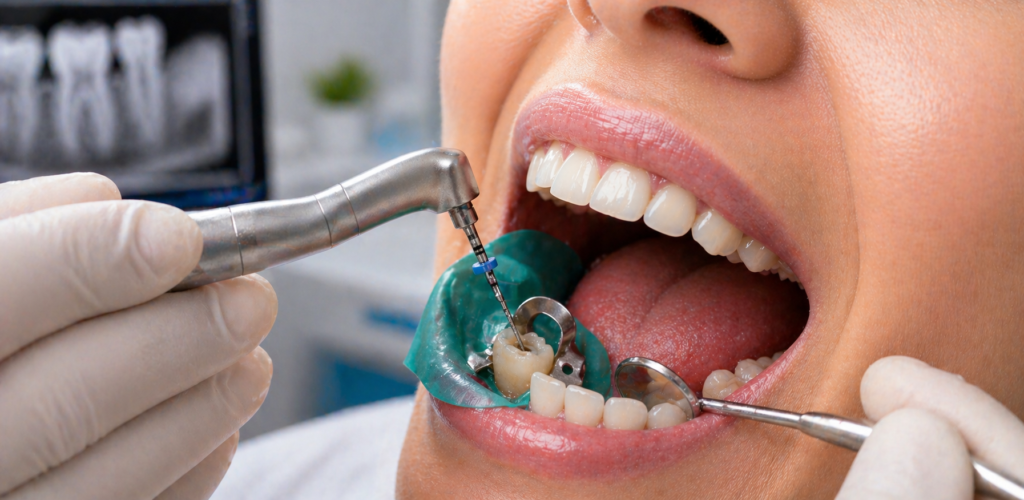
Root canal treatment is a procedure used to save a severely infected or decayed tooth. It involves removing the infected pulp inside the tooth, cleaning and disinfecting the root canals, and sealing them to prevent further infection. This treatment helps relieve pain, restore function, and preserve your natural tooth. Modern techniques make root canal procedures safe, effective, and virtually painless.

Dentist evaluates the infection and checks the root structure.

Local anesthesia is administered for a painless experience.

Infected pulp is removed and canals are thoroughly cleaned.

Canals are filled with a special material to prevent reinfection.

A dental crown is placed to restore strength and function.
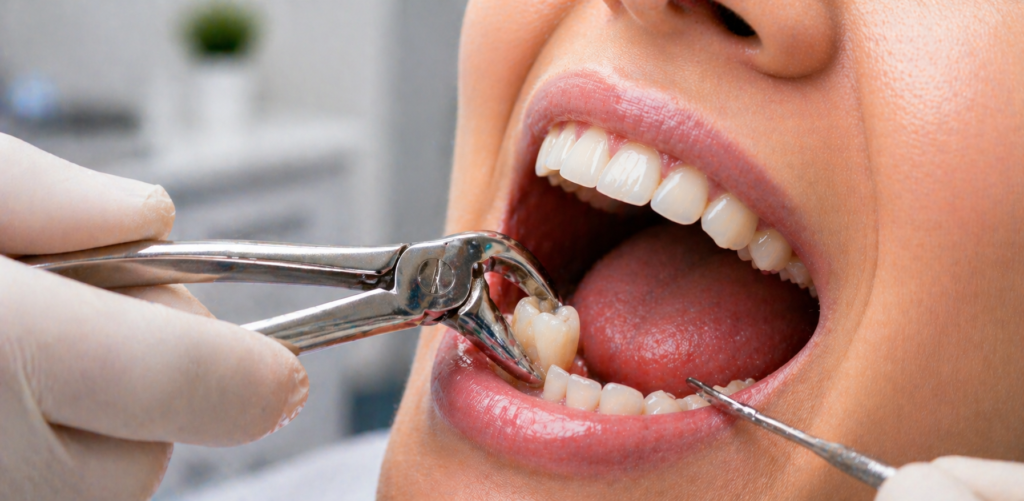
Tooth extraction is a dental procedure in which a damaged, decayed, or problematic tooth is removed from its socket. It is usually recommended when a tooth cannot be saved through other treatments like fillings or root canals. Extractions help relieve pain, prevent infection from spreading, and improve overall oral health. The procedure is safe, quick, and performed under local anesthesia for maximum comfort.

Dentist evaluates the tooth condition and surrounding bone.

Local anesthesia is given to numb the area and ensure a painless procedure.

The tooth is gently loosened using special dental instruments.

The tooth is carefully removed from the socket.

Gauze is placed, and aftercare instructions are given for healing.
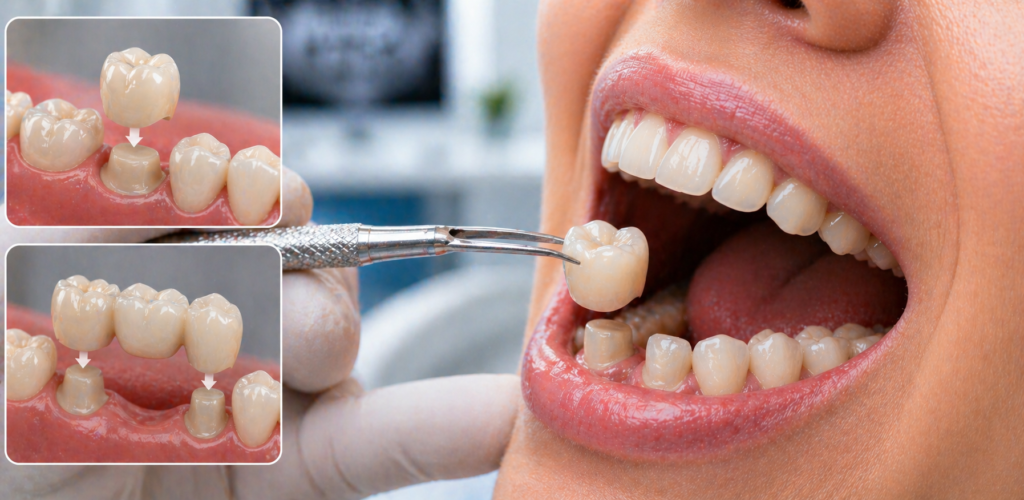
Dental crowns and bridges are restorative treatments used to repair and replace damaged or missing teeth. A crown is a cap placed over a weakened tooth to restore its shape, strength, and appearance. A bridge is used to fill the gap created by one or more missing teeth by anchoring to adjacent teeth. These solutions improve chewing, speech, and overall smile aesthetics while maintaining proper dental alignment.

Dentist examines teeth and determines the need for a crown or bridge.

The affected tooth/teeth are reshaped to support the crown or bridge.

Molds are taken to create a custom-fit restoration.

A temporary restoration is placed until the final one is ready.

Permanent crown or bridge is fixed and adjusted for comfort and bite.
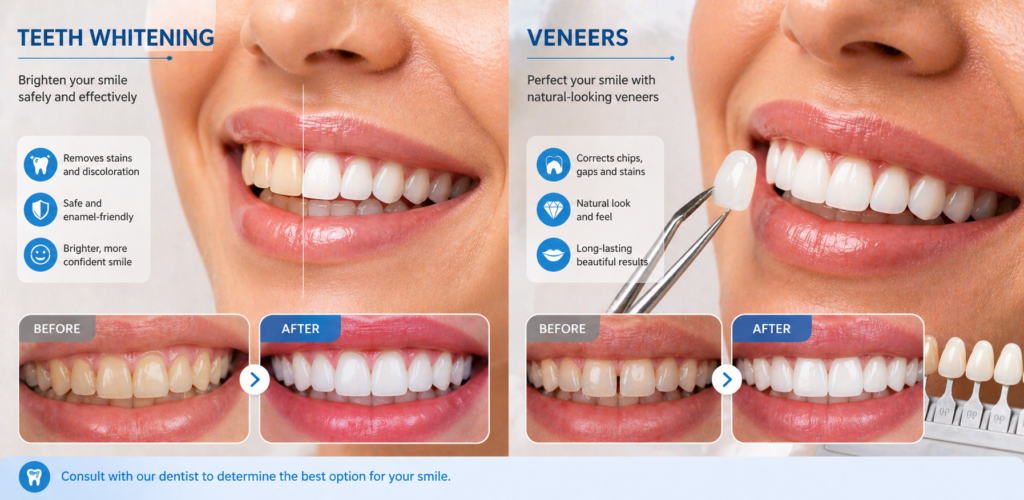
Teeth whitening is a popular cosmetic dental treatment that helps remove stains and discoloration, giving you a brighter smile. It uses safe bleaching agents to lighten the natural color of your teeth. The procedure is quick, effective, and can significantly enhance your appearance. Professional whitening offers faster and longer-lasting results compared to home remedies.

Dentist evaluates your teeth and determines the current shade.

Plaque and surface stains are removed before the procedure.

A protective barrier is applied to safeguard gums and soft tissues.

Whitening gel is applied and activated using a special light if needed.

Teeth are cleaned, and the new brighter shade is assessed.
Your treatments are handled by licensed doctors and trained medical staff, ensuring every procedure is safe, evidence-based, and tailored to each patient.
You follow clinical-grade sterilization protocols and use approved equipment and products, minimizing risks and prioritizing patient safety at every step.
No one-size-fits-all approach—each client receives a consultation and customized plan based on their goals, health history, and realistic outcomes.
You provide honest guidance, explain benefits and limitations clearly, and avoid unnecessary procedures—building long-term trust with patients.